
Legacy database migration is no longer a simple IT upgrade. It is a strategic imperative for organizations seeking to unlock the full potential of artificial intelligence and modern analytics. According to recent industry reports, data migration strategies are now central to digital transformation roadmaps, with over 80% of enterprises planning to move workloads to public cloud environments by 2026. However, moving complex, monolithic systems requires more than just lifting and shifting. It demands a custom approach that addresses data integrity, operational continuity, and future scalability.
Understanding Legacy Database Challenges
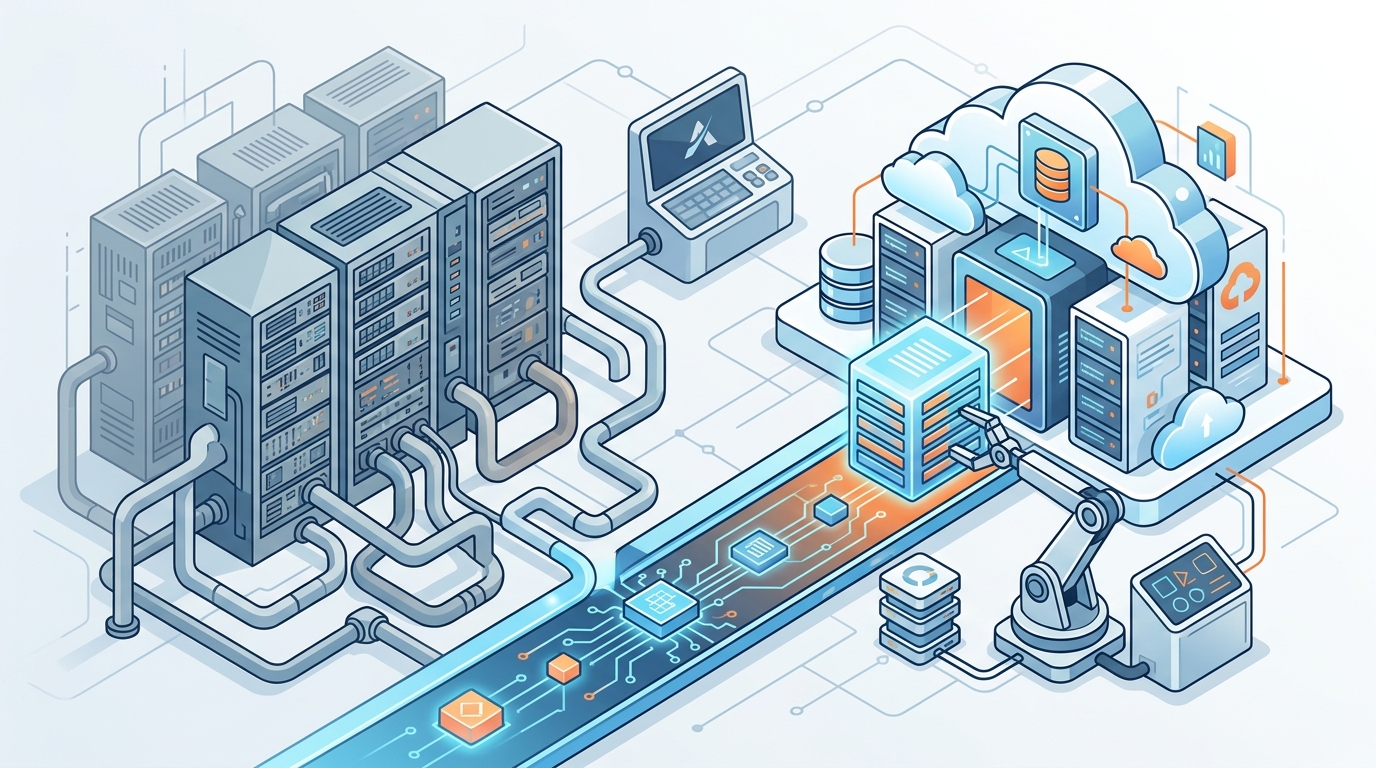
Legacy databases often serve as the backbone of critical business operations. These systems, whether running on older versions of SQL Server, Oracle, or mainframe architectures, hold decades of institutional knowledge. The primary challenge in migrating these systems is not just the technical complexity, but the risk of data loss or operational downtime. Cloud migration risks are significant if not managed with precision, particularly regarding data consistency across distributed environments.
Data silos are a common symptom of legacy architectures. When data is trapped in incompatible formats or proprietary structures, it limits the ability to leverage AI and analytics. This is where a custom migration solution becomes essential. It allows organizations to break down these silos, transforming rigid data structures into flexible, cloud-native formats. The goal is to create a unified data ecosystem that supports real-time decision-making.
Another critical factor is the technical debt associated with legacy systems. Maintaining outdated hardware and software licenses is increasingly expensive and inefficient. By migrating to the cloud, organizations can reduce their Total Cost of Ownership (TCO) while gaining access to scalable resources. This shift enables businesses to focus on innovation rather than maintenance.
The Acumen Velocity Migration Process
At Acumen Velocity, we employ a rigorous, seven-step process to ensure seamless database migration. This methodology is designed to minimize risk and maximize value at every stage of the transition. Our approach is grounded in data engineering principles and tailored to the specific needs of each client.
Step 1: Assess Current Landscape
The journey begins with a comprehensive assessment of the current data landscape. We analyze the existing database architecture, identify dependencies, and evaluate the volume and complexity of the data. This step is crucial for understanding the scope of the migration and identifying potential bottlenecks.
Step 2: Perform Data Assessment
Once the landscape is mapped, we perform a detailed data assessment. This involves profiling the data to understand its quality, structure, and relationships. We identify any anomalies or inconsistencies that need to be addressed before migration. This proactive approach ensures that the data entering the cloud environment is clean and reliable.
Step 3: Calculate Current TCO
Understanding the financial implications of the current system is vital. We calculate the Total Cost of Ownership (TCO) for the legacy environment, including hardware, software, maintenance, and personnel costs. This baseline allows us to project the cost savings and ROI of the cloud migration.
Step 4: Create Data Strategy
Based on the assessment, we develop a customized data strategy. This strategy outlines the target architecture, migration timeline, and resource allocation. It also includes a plan for data governance and compliance, ensuring that the new environment meets all regulatory requirements.
Step 5: Present TCO for Proposed Architecture
We present a detailed TCO analysis for the proposed cloud architecture. This comparison highlights the financial benefits of the migration, such as reduced infrastructure costs and improved operational efficiency. It provides stakeholders with a clear understanding of the investment and expected returns.
Step 6: Implement Proof of Concept
Before full-scale migration, we implement a Proof of Concept (PoC). This allows us to test the migration strategy in a controlled environment, validating the technical approach and identifying any unforeseen issues. The PoC serves as a blueprint for the full migration, ensuring confidence in the execution.
Step 7: Plan for Next Iteration
Finally, we plan for the next iteration of the data strategy. This includes ongoing monitoring, optimization, and the integration of new technologies such as AI and machine learning. This continuous improvement approach ensures that the data environment remains agile and competitive.
Selecting the Right Cloud Platform
Choosing the right cloud platform is a critical decision that impacts the success of the migration. The three major providers—AWS, Azure, and Google Cloud—offer distinct advantages depending on the organization's needs. Cloud computing trends indicate a growing preference for multi-cloud strategies to avoid vendor lock-in and optimize performance.
| Platform | Key Strengths | Best For |
|---|---|---|
| AWS | Extensive service catalog, global infrastructure | Large-scale enterprises, complex workloads |
| Azure | Strong integration with Microsoft ecosystems | Organizations using Office 365 and SQL Server |
| Google Cloud | Advanced AI/ML capabilities, data analytics | Data-driven companies, AI integration |
Acumen Velocity offers expertise across all major platforms. Our modern data stack solutions are designed to leverage the unique strengths of each provider, ensuring optimal performance and cost-efficiency. We help clients navigate the complexities of cloud selection to find the best fit for their specific business goals.
Ensuring Data Integrity and Security
Data integrity is non-negotiable during migration. Any loss or corruption of data can have severe consequences for business operations. To mitigate these risks, we employ rigorous validation techniques at every stage of the process. This includes checksums, row counts, and sample data comparisons between the source and target environments.
Security is another paramount concern. Legacy databases often contain sensitive information that must be protected during transit and at rest. We implement encryption protocols and access controls to safeguard data throughout the migration. Compliance with regulations such as GDPR, HIPAA, and SOC 2 is ensured through our data governance frameworks.
Furthermore, we utilize advanced tools for data transformation and cleansing. This ensures that the data in the cloud environment is not only secure but also optimized for analytics and AI applications. By addressing data quality issues early, we prevent future complications and enhance the value of the data assets.
Cost Optimization and TCO Analysis
While cloud migration offers significant long-term savings, the initial investment can be substantial. A thorough TCO analysis helps organizations understand the true cost implications and identify opportunities for optimization. This includes evaluating licensing costs, storage requirements, and compute resources.
Acumen Velocity provides detailed TCO projections for proposed architectures. We help clients choose the right pricing models, such as reserved instances or spot instances, to maximize savings. Additionally, we identify opportunities to consolidate redundant systems and eliminate unnecessary expenses.
Our Cloud Database Migration services are designed to deliver powerful data solutions with precision and predictability. We ensure that the migration process is not only technically sound but also financially viable, providing a clear path to ROI.
Key Takeaways
- Legacy database migration is a strategic imperative for AI readiness and operational efficiency.
- Acumen Velocity utilizes a seven-step process, from landscape assessment to next-iteration planning.
- Choosing the right cloud platform depends on specific business needs and existing tech stacks.
- Data integrity and security must be prioritized through rigorous validation and encryption.
- A detailed TCO analysis is essential for understanding financial implications and optimizing costs.
- Custom migration solutions break down data silos and unlock new business value.
- Acumen Velocity offers expertise across AWS, Azure, and Google Cloud platforms.
Frequently Asked Questions
What is the typical timeline for a legacy database migration?
The timeline varies based on the complexity of the legacy system and the volume of data. However, our structured process ensures efficient execution, typically ranging from a few months for smaller databases to over a year for large-scale enterprise systems.
How do you ensure data consistency during migration?
We use advanced data profiling and validation tools to compare source and target data. Checksums, row counts, and sample data comparisons are performed at every stage to ensure absolute consistency.
Can you migrate data from on-premises to multiple cloud providers?
Yes, we support multi-cloud strategies. We help organizations design architectures that leverage the strengths of AWS, Azure, and Google Cloud to avoid vendor lock-in and optimize performance.
What is the role of AI in modern database migration?
AI plays a crucial role in automating data mapping, identifying anomalies, and optimizing query performance in the new environment. It also enables predictive analytics on the migrated data.
How does Acumen Velocity handle data security during migration?
We implement end-to-end encryption, strict access controls, and compliance with industry standards like GDPR and HIPAA. Our data governance team ensures that all security protocols are followed.
What is the cost benefit of migrating to the cloud?
Cloud migration reduces hardware maintenance costs, improves scalability, and enhances operational efficiency. Our TCO analysis provides a clear projection of these savings and the expected ROI.
Do you provide post-migration support?
Yes, we offer managed services and ongoing support to ensure the cloud environment continues to meet business needs. This includes monitoring, optimization, and integration of new technologies.
Ready to Transform Your Data?
Don't let legacy systems hold your business back. Unlock the full potential of your data with Acumen Velocity's custom migration solutions. Contact us today to schedule a consultation and learn how we can help you achieve your digital transformation goals. Visit our Contact page to get started.