

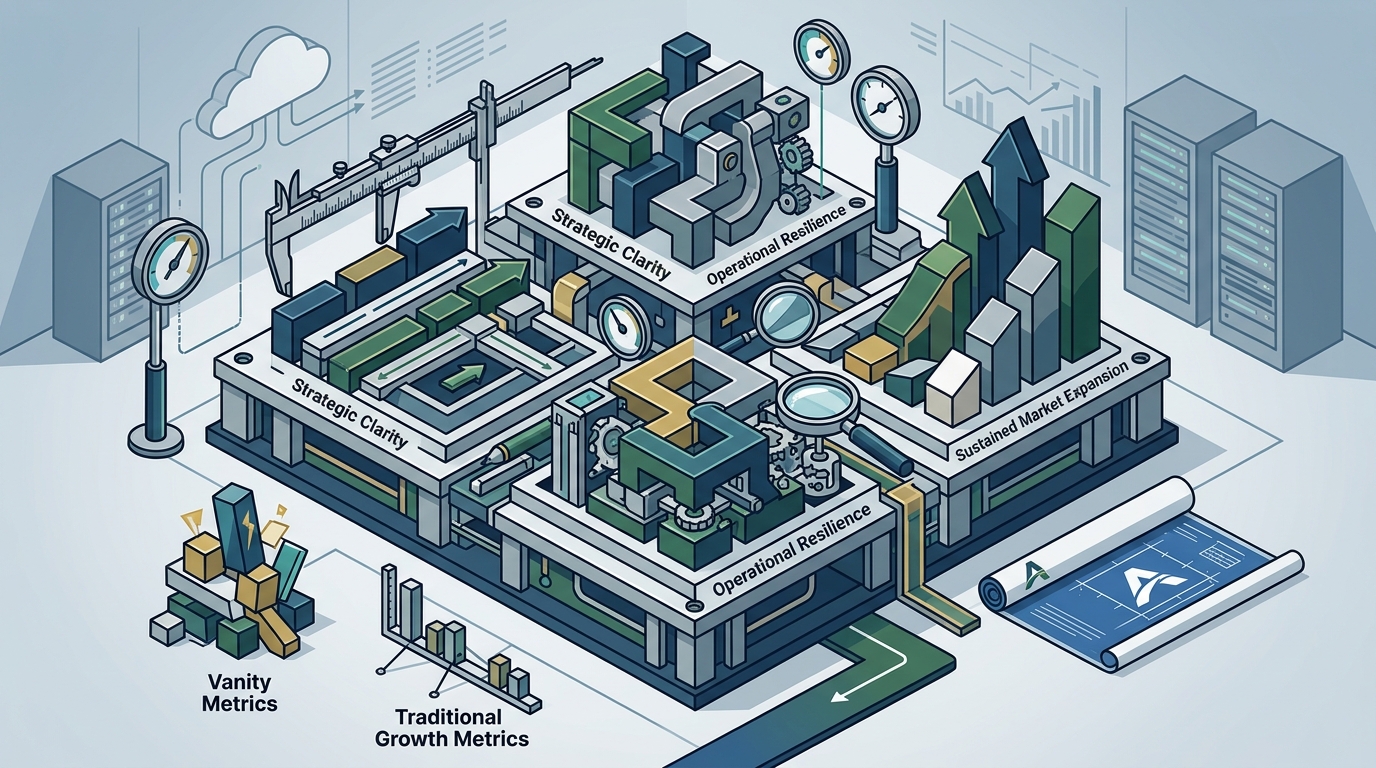
Modern enterprises face a critical inflection point where traditional metrics no longer predict future success. According to a 2024 McKinsey report, organizations that implement rigorous evaluation frameworks see a 23% higher probability of sustained market expansion. This statistic highlights the urgent need for leaders to move beyond superficial vanity metrics and adopt a holistic approach to assessing organizational health. At Acumen Velocity, we believe that true growth is not merely an increase in revenue but a measurable improvement in operational resilience and strategic clarity. This guide provides the definitive roadmap for evaluating your business trajectory with precision and foresight.
Defining Growth in the Modern Context
Before evaluating growth, one must first define what growth actually means for your specific organization. In the current economic landscape, growth is often conflated with top-line revenue, but this is a dangerous oversimplification. Strategic growth is the sustainable expansion of value creation capabilities. This definition encompasses not just financial returns but also the ability to innovate, retain talent, and adapt to market shifts.
Many leaders fail because they evaluate the wrong indicators. For instance, a company might show 20% revenue growth while simultaneously losing market share in its core demographic. This is a classic case of vanity metrics masking underlying structural weaknesses. To avoid this trap, you must establish a baseline of what success looks like for your unique business model. Is your goal market penetration? Profitability? Or perhaps technological leadership? The answer dictates which evaluation tools you deploy.
At Acumen Velocity, we emphasize that evaluation is not a one-time event but a continuous loop. The market dynamics change rapidly, and so must your criteria for success. By aligning your definition of growth with your long-term vision, you create a stable foundation for all subsequent assessments. This clarity prevents resource misallocation and ensures that every department is pulling in the same direction.
Financial Metrics That Matter
Financial health is the lifeblood of any enterprise, but not all financial metrics are created equal. Traditional accounting measures like net income are lagging indicators. They tell you what happened, not what will happen. To evaluate future potential, you must focus on leading indicators that predict financial stability.
One critical metric is the Customer Acquisition Cost (CAC) to Lifetime Value (LTV) ratio. Industry standards suggest that a healthy ratio is 3:1. If your CAC is too high relative to LTV, your growth is unsustainable. According to data from HubSpot in 2025, companies with a CAC:LTV ratio above 3:1 experience significantly higher churn rates. This data shows that acquiring customers is only half the battle; retaining them profitably is the true test of financial strategy.
Another vital metric is the Rule of 40, particularly for SaaS and technology-driven businesses. This rule states that your revenue growth rate plus your profit margin should equal or exceed 40%. If your company is growing rapidly but burning cash, you must evaluate your path to profitability. Conversely, if you are highly profitable but growing slowly, you may be leaving market share on the table. Balancing these two forces is a delicate art that requires constant monitoring.
Evaluating cash flow is equally important. Revenue is an opinion; cash is a fact. Many growing businesses fail because they run out of cash before they realize they are profitable on paper. You must evaluate your cash conversion cycle to ensure that you have the liquidity to fund operations and seize new opportunities. This requires a deep dive into accounts receivable, inventory management, and accounts payable.
Assessing Operational Efficiency
Growth without efficiency is merely chaos. As your organization scales, operational bottlenecks become more pronounced. Evaluating operational efficiency involves looking at the speed, cost, and quality of your core processes. Are you delivering value to customers faster than your competitors? Are you doing so at a lower cost? These are the questions that determine your competitive advantage.
One effective way to assess this is through process mapping and value stream analysis. Identify every step in your workflow and eliminate those that do not add value. This is not just about cutting costs but about enhancing customer experience. For example, reducing the time it takes to onboard a new client can significantly improve satisfaction and reduce churn. At Acumen Velocity, we help clients identify these inefficiencies through rigorous diagnostic frameworks.
Technology plays a pivotal role in operational efficiency. Are you leveraging automation to handle repetitive tasks? Are your systems integrated to provide real-time data? Siloed data creates blind spots that hinder decision-making. A unified tech stack allows for better visibility and faster response times. Evaluate your technology stack not just for its current capabilities but for its scalability and integration potential.
Furthermore, consider the human element of operational efficiency. Are your teams empowered to make decisions? Is there a culture of continuous improvement? Tools and processes are only as good as the people who use them. Regular training and development programs ensure that your workforce can adapt to new technologies and methodologies. This investment in human capital is often overlooked but is critical for long-term operational success.
Customer-Centric Evaluation
In the modern economy, the customer is king. Evaluating your business through the lens of customer satisfaction and loyalty is non-negotiable. Net Promoter Score (NPS) is a widely used metric, but it should not be the only one. Customer Effort Score (CES) is equally important. It measures how easy it is for customers to do business with you. Lower effort correlates with higher loyalty.
According to a 2024 Gartner study, companies that prioritize customer experience outperform their peers by 80% in revenue growth. This ranking underscores the financial impact of customer-centric strategies. You must evaluate not just what customers say but what they do. Do they renew their contracts? Do they buy additional products? Do they refer others? These behavioral metrics provide a more accurate picture of customer health than survey responses alone.
Segmentation is also key. Not all customers are equal. Evaluate the profitability and strategic value of different customer segments. Focus your resources on high-value segments while finding ways to serve lower-value segments more efficiently. This targeted approach ensures that you are maximizing return on investment for every customer interaction.
Feedback loops are essential for continuous improvement. Create mechanisms for customers to provide feedback at every touchpoint. Analyze this feedback to identify pain points and opportunities. Act on this feedback visibly to show customers that their voices are heard. This builds trust and strengthens the relationship. At Acumen Velocity, we advocate for a closed-loop feedback system that ensures no comment goes unanswered.
Strategic Alignment and Culture
Even the best financial and operational metrics mean nothing if the organization is not aligned with its strategic goals. Culture eats strategy for breakfast. If your employees do not understand or believe in the company's direction, execution will falter. Evaluating strategic alignment involves assessing how well your daily operations support your long-term vision.
Start by reviewing your mission, vision, and values. Are they clear and communicated effectively? Do employees understand how their roles contribute to the bigger picture? Misalignment often occurs when strategy is developed in isolation from operational teams. Involve key stakeholders in the strategy formulation process to ensure buy-in and clarity.
Leadership behavior is a powerful indicator of cultural alignment. Do leaders model the values they espouse? Do they make decisions that reflect the company's strategic priorities? Inconsistencies between words and actions erode trust and undermine strategic initiatives. Regular leadership assessments and training can help ensure that leaders are aligned and effective.
Change management is another critical aspect of strategic alignment. As your business evolves, so must your strategies. Evaluate your ability to manage change effectively. Do you have the processes and people in place to adapt quickly? Resistance to change is a common barrier to growth. Address this by fostering a culture of agility and learning. Encourage experimentation and reward innovation. This creates an environment where growth is not just possible but expected.
Comparative Analysis Framework
To truly evaluate your business, you must compare your performance against relevant benchmarks. This could be against industry peers, historical performance, or strategic goals. A structured comparison framework helps you identify gaps and opportunities. The following table outlines key areas for comparison.
| Evaluation Area | Key Metric | Industry Benchmark | Your Performance | Action Required |
|---|---|---|---|---|
| Financial Health | CAC:LTV Ratio | 3:1 | 4:1 | Optimize acquisition channels |
| Operational Efficiency | Process Cycle Time | 48 hours | 72 hours | Implement automation tools |
| Customer Satisfaction | Net Promoter Score | 50 | 65 | Maintain current strategies |
| Strategic Alignment | Employee Engagement Index | 75% | 60% | Launch culture initiatives |
This framework allows you to visualize your strengths and weaknesses at a glance. Use this data to prioritize your improvement efforts. Focus on areas where you are significantly below benchmark or where improvement will have the highest impact on your strategic goals. Regularly update this table to track progress over time.
Key Takeaways
- Growth is multidimensional: It includes financial, operational, and customer-centric factors, not just revenue.
- Leading indicators matter: Focus on metrics that predict future performance, such as CAC:LTV and Rule of 40.
- Efficiency drives scalability: Operational bottlenecks must be identified and removed to support sustainable growth.
- Customer experience is financial: High NPS and low CES correlate directly with revenue growth and retention.
- Culture enables strategy: Strategic alignment and employee engagement are critical for execution.
- Benchmarking provides context: Compare your performance against industry standards to identify gaps.
- Continuous evaluation is key: Growth assessment is an ongoing process, not a one-time event.
Frequently Asked Questions
What is the most important metric for evaluating business growth?
There is no single most important metric. The best approach is to use a balanced scorecard that includes financial, customer, operational, and learning/growth metrics. However, for many businesses, the CAC:LTV ratio is a critical indicator of sustainable growth.
How often should a business evaluate its growth strategy?
Businesses should evaluate their growth strategy quarterly at a minimum. However, leading indicators should be monitored monthly or even weekly. This allows for timely adjustments and prevents small issues from becoming large problems.
What is the difference between growth and scaling?
Growth refers to an increase in revenue or market share. Scaling refers to the ability to grow revenue significantly faster than costs. A business can grow without scaling if costs increase proportionally. True scaling requires operational efficiency and leverage.
How can small businesses evaluate their growth effectively?
Small businesses should focus on a few key metrics that align with their immediate goals. Avoid analysis paralysis by selecting 3-5 critical indicators. Use simple tools like spreadsheets or basic dashboards to track these metrics regularly. Seek mentorship or advisory support to gain perspective.
Why is customer retention important for growth evaluation?
Customer retention is often more profitable than acquisition. Retaining existing customers is cheaper and provides a stable revenue base. High retention rates indicate customer satisfaction and product-market fit, which are essential for long-term growth.
What role does technology play in evaluating growth?
Technology provides the data and tools necessary for accurate evaluation. Analytics platforms, CRM systems, and ERP software enable real-time monitoring of key metrics. Without technology, evaluation is often manual, slow, and prone to error.
How do you handle negative growth evaluation results?
Negative results are opportunities for improvement. Conduct a root cause analysis to understand why performance is lacking. Develop an action plan with clear milestones and accountability. Communicate transparently with stakeholders about the challenges and the plan to address them.
Next Steps for Your Business
Evaluating your business growth is the first step toward sustainable success. However, identification is only half the battle. Implementation requires expertise, discipline, and a clear roadmap. At Acumen Velocity, we specialize in helping businesses navigate this complex landscape. Our team provides tailored strategies that align with your unique goals and challenges. Visit our services page to learn more about our offerings. Schedule a consultation today to begin your journey toward accelerated growth. Do not let uncertainty hold your business back. Take control of your future with Acumen Velocity.