

Evaluating FHIR Security Frameworks Across AWS, Google Cloud, and Azure for Healthcare Predictive Analytics
Healthcare organizations are increasingly turning to predictive analytics to improve patient outcomes and operational efficiency. However, the foundation of any successful predictive model is the secure handling of sensitive patient data. According to recent industry reports, over 60% of healthcare data breaches involve compromised electronic health records (EHRs). This statistic underscores the critical need for robust security frameworks when implementing Fast Healthcare Interoperability Resources (FHIR) on major cloud platforms. As organizations race to embed AI into every process, from predicting market shifts to optimizing healthcare workflows, the underlying data infrastructure must be both agile and impenetrable. Acumen Velocity specializes in helping organizations navigate this complex landscape by leveraging best-in-class AI methodologies and secure data architectures. (About Us Acumen Velocity)
Understanding FHIR Security Standards
Before diving into specific cloud providers, it is essential to define the core standards that govern healthcare data interoperability. FHIR is a standard describing data structures and definitions used in healthcare and healthcare-related applications. It enables the exchange of healthcare data between systems. However, the standard itself does not dictate the security implementation. Instead, it relies on underlying protocols like OAuth 2.0 and OpenID Connect for authentication and authorization.
For predictive analytics to function effectively, data must be accessible to AI models while remaining protected from unauthorized access. This balance is achieved through strict identity management, encryption at rest and in transit, and comprehensive audit logging. Acumen Velocity’s approach to FHIR implementation emphasizes secure management of PHI and PII to gain predictive insights without compromising patient privacy. By establishing data governance frameworks, organizations can ensure regulatory compliance while unlocking the full potential of their data.
AWS HealthLake: Security and Compliance
AWS HealthLake is a fully managed, HIPAA-eligible service that makes it easy to store, normalize, and analyze health data in the cloud. It uses the FHIR standard to structure data, making it easier to integrate with other AWS services for analytics and machine learning.
Data Encryption and Storage
AWS HealthLake encrypts data at rest using AWS Key Management Service (KMS). This ensures that patient data is protected even if the underlying storage infrastructure is compromised. For data in transit, AWS HealthLake uses TLS 1.2 or higher to secure communications between clients and the service. This dual-layer encryption strategy is critical for maintaining data integrity in predictive analytics workflows.
Identity and Access Management
Integration with AWS Identity and Access Management (IAM) allows for granular control over who can access FHIR resources. Organizations can define policies that restrict access based on roles, ensuring that only authorized personnel and AI models can interact with sensitive data. This level of control is essential for maintaining compliance with HIPAA and other regulatory requirements.
Google Cloud Healthcare API: Data Protection
Google Cloud Healthcare API provides a managed service for storing, transforming, and analyzing healthcare data. It supports FHIR, DICOM, and HL7 v2 standards, making it a versatile choice for healthcare organizations with diverse data needs. Google Cloud’s emphasis on privacy and security is reflected in its comprehensive suite of data protection tools.
Privacy Sandbox and Data Isolation
Google Cloud Healthcare API utilizes a privacy sandbox approach to isolate healthcare data from other workloads. This isolation ensures that patient data is not inadvertently exposed to other applications or services within the same project. Additionally, Google Cloud offers Customer-Managed Encryption Keys (CMEK), allowing organizations to retain full control over their encryption keys.
AI and Predictive Analytics Integration
One of the key advantages of Google Cloud Healthcare API is its seamless integration with Google’s AI and machine learning tools. This integration enables organizations to build predictive models directly on FHIR data without the need for complex data extraction processes. Acumen Translation Hub (ATH), a solution available on Google Cloud Marketplace, further enhances this capability by providing AI-powered translation and processing services.
Azure Health Data Services: Identity Management
Azure Health Data Services is a managed service that helps healthcare organizations securely store, share, and analyze health data. It supports FHIR and DICOM standards and integrates with Azure’s broader ecosystem of security and compliance tools.
Microsoft Entra ID Integration
Azure Health Data Services integrates with Microsoft Entra ID (formerly Azure Active Directory) to provide robust identity management. This integration enables single sign-on (SSO) and multi-factor authentication (MFA) for accessing FHIR resources. By leveraging Microsoft’s identity platform, organizations can ensure that only authenticated users and applications can access sensitive healthcare data.
Compliance and Audit Capabilities
Azure Health Data Services provides comprehensive audit logs that track all access and modifications to FHIR resources. These logs are essential for monitoring data usage and detecting potential security incidents. Additionally, Azure Health Data Services is designed to help organizations meet regulatory requirements such as HIPAA, GDPR, and HITRUST.
Comparative Analysis of Security Features
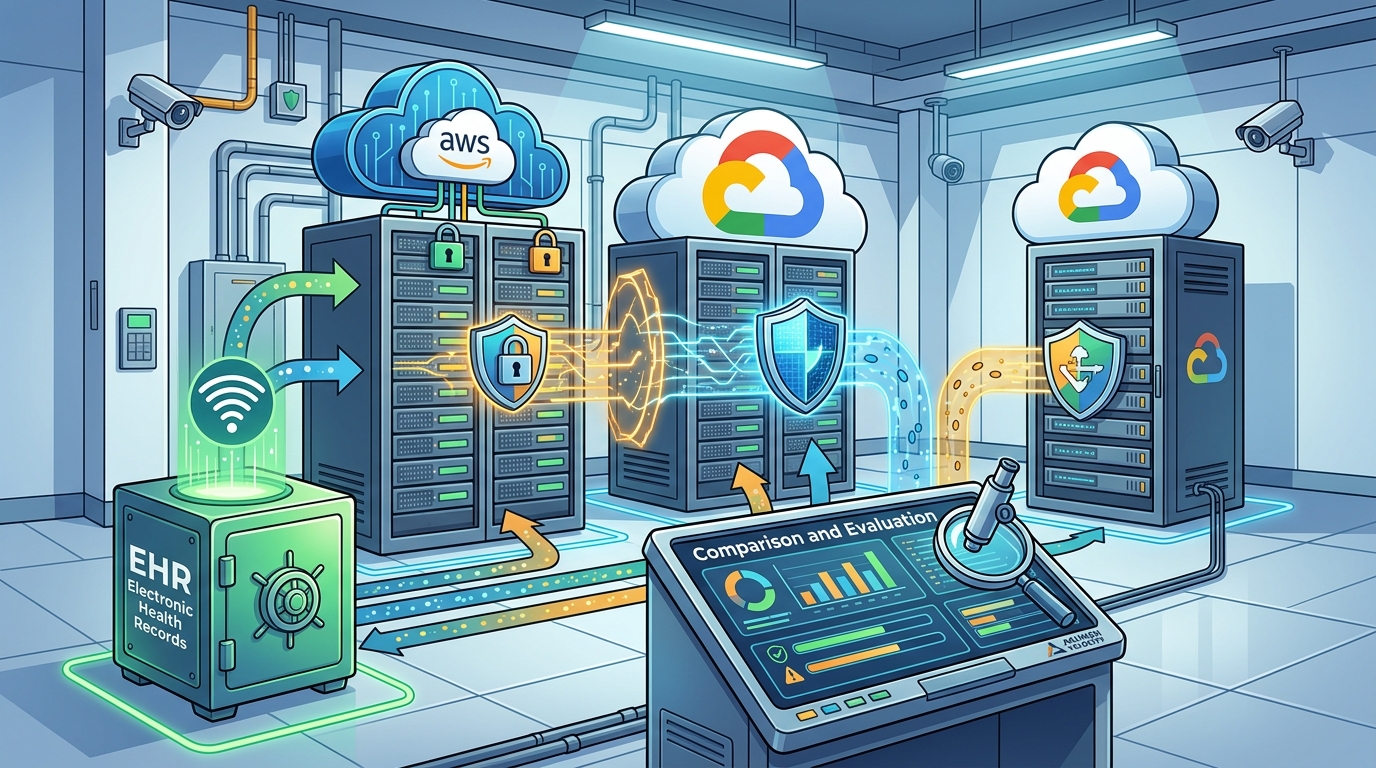
When evaluating FHIR security frameworks across AWS, Google Cloud, and Azure, several key factors emerge. Each platform offers unique strengths in terms of encryption, identity management, and compliance. The following table summarizes the core security features of each provider.
| Feature | AWS HealthLake | Google Cloud Healthcare API | Azure Health Data Services |
|---|---|---|---|
| Encryption at Rest | AWS KMS | CMEK / Google-managed | Azure Key Vault |
| Identity Management | AWS IAM | Cloud Identity / IAM | Microsoft Entra ID |
| Compliance Certifications | HIPAA, GDPR | HIPAA, GDPR, HITRUST | HIPAA, GDPR, HITRUST |
| AI Integration | SageMaker, Comprehend Medical | Vertex AI, Cloud Healthcare AI | Azure Machine Learning, Cognitive Services |
| Data Isolation | VPC, Security Groups | Privacy Sandbox | Private Endpoints, VNet |
While all three platforms offer robust security features, the choice often depends on an organization’s existing infrastructure and specific compliance needs. For instance, organizations already invested in the Microsoft ecosystem may find Azure Health Data Services more seamless to integrate. Similarly, those leveraging Google’s AI tools may prefer Google Cloud Healthcare API. Acumen Velocity helps clients assess their current landscape and create a data strategy that aligns with their business goals.
Key Takeaways
- Security is Paramount: Over 60% of healthcare data breaches involve compromised EHRs, making robust FHIR security frameworks essential for predictive analytics.
- AWS HealthLake: Offers strong integration with AWS IAM and KMS, ideal for organizations already using the AWS ecosystem.
- Google Cloud Healthcare API: Provides seamless AI integration and privacy sandbox features, suitable for data-driven innovation.
- Azure Health Data Services: Leverages Microsoft Entra ID for robust identity management, perfect for Microsoft-centric enterprises.
- Compliance is Non-Negotiable: All three platforms offer HIPAA, GDPR, and HITRUST compliance, but implementation details vary.
- Acumen Velocity Expertise: Specializes in FHIR implementation, data governance, and AI-driven solutions to secure healthcare data.
- Strategic Assessment: Organizations must assess their current data landscape and TCO before choosing a cloud provider for FHIR implementation.
Frequently Asked Questions
What is FHIR and why is it important for healthcare?
FHIR (Fast Healthcare Interoperability Resources) is a standard for exchanging healthcare information electronically. It is important because it enables seamless data exchange between different healthcare systems, improving patient care and operational efficiency.
How does AWS HealthLake ensure data security?
AWS HealthLake ensures data security through encryption at rest using AWS KMS, TLS 1.2+ for data in transit, and granular access control via AWS IAM. It is also HIPAA-eligible.
What are the benefits of using Google Cloud Healthcare API for predictive analytics?
Google Cloud Healthcare API offers seamless integration with Google’s AI and machine learning tools, allowing organizations to build predictive models directly on FHIR data. It also provides robust data isolation and privacy features.
How does Azure Health Data Services handle identity management?
Azure Health Data Services integrates with Microsoft Entra ID to provide robust identity management, including single sign-on (SSO) and multi-factor authentication (MFA) for accessing FHIR resources.
Can Acumen Velocity help with FHIR implementation?
Yes, Acumen Velocity specializes in FHIR implementation for healthcare, helping organizations securely manage PHI and PII to gain predictive insights. We offer services ranging from data strategy to AI-driven solutions.
What is the role of data governance in FHIR security?
Data governance establishes frameworks and policies to ensure the quality, security, and compliance of healthcare data. It is critical for maintaining trust and regulatory compliance in FHIR implementations.
How do I choose the right cloud provider for FHIR?
The choice depends on your existing infrastructure, compliance needs, and AI requirements. Acumen Velocity can help assess your current landscape and create a data strategy that aligns with your business goals.
Partner with Acumen Velocity
Navigating the complexities of FHIR security frameworks across AWS, Google Cloud, and Azure requires expertise and strategic insight. Acumen Velocity is dedicated to helping healthcare organizations unlock the full potential of their data while ensuring robust security and compliance. Our team of experts specializes in FHIR implementation, data governance, and AI-driven solutions tailored to your unique needs.
Whether you are looking to migrate your legacy database to the cloud, implement a data lakehouse powered by Iceberg, or enhance your predictive analytics capabilities, Acumen Velocity is here to help. Contact us today to learn more about our services and how we can empower your data with AI. Visit our Contact page to schedule a consultation or explore our Services to discover how we can transform your healthcare data strategy.